



In recent years, several workplace trends have emerged that many employers find challenging. One such trend is "quiet quitting," where employees do only the bare minimum required to keep their jobs. A more recent trend is to "act your wage."
In recent years, several workplace trends have emerged that many employers find challenging. One such trend is "quiet quitting," where employees do only the bare minimum required to keep their jobs. A more recent trend is to "act your wage."
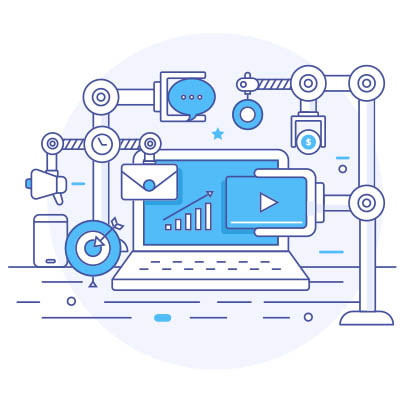
With technology being such a massive part of business today, many organizations are looking to use it to their advantage. One aspect of the business that is increasingly significant is their ability to stand out amongst their competition. Let’s take a look at a few technologies that can improve your organizational marketing efforts.

Technology is an essential part of most business operations nowadays, regardless of the size of the business… and how that size may change over time. As such, it is essential that the infrastructure that supports this IT can adapt to these swells and declines.
Let’s discuss why it is so important that your IT infrastructure fits your business and a few best practices for tailoring it.

Businesses are constantly trying to find a way to best use their data. Whether it is creating a business intelligence strategy, integrating artificial intelligence, or for simple analytics, without having accurate, reliable data, the insights you derive can be misleading and end up costing you. That’s why it is important to know how to scrub or clean your data. Having access to clean data is essential for anyone involved in business intelligence or AI. Today, we will discuss the issue and give you a simple guide to help you get started.

Productivity is extremely important for your business' ability to generate revenue and maintain consistent performance. Interestingly, many businesses face similar productivity challenges over time. What can small and medium-sized businesses (SMBs) do to improve productivity when it starts to decline? Let's take a look at some strategies to keep productivity high.
You can do everything in your power to secure your social media accounts and lock down your privacy settings. Still, at the end of the day, social media users expose themselves to a torrent of information and content every time they log on. As a civilization, we’ve never really had something like this before. These platforms curate content that the user wants to see to keep the user coming back and staying longer. It’s inherently designed to be enticing and addicting, which is dangerous for certain individuals.
Then, there are scams and an endless stream of grifts that pose a wide range of additional problems for users.
Let’s talk about ways you and those you care about can be safer on social media.

It’s no secret that things are more expensive nowadays, making it important that businesses have access to the technology needed to generate revenue. Without this access, a business suffers downtime and all the challenges it brings… not something you want to do.
Let’s consider why downtime happens, the scale of its costs, and what can be done to avoid it.

We all want our businesses to succeed… that’s generally the point of running one. However, this will require you to set the right goals and do so correctly.
Let’s walk through the process you should follow to accomplish this.

Social media is constantly evolving, and if the big social networks had it their way, it would be the only place people go when they log onto the Internet. Whether you have strong feelings for or against social media, or perhaps you are indifferent, it’s important to understand how to protect yourself when using social media.
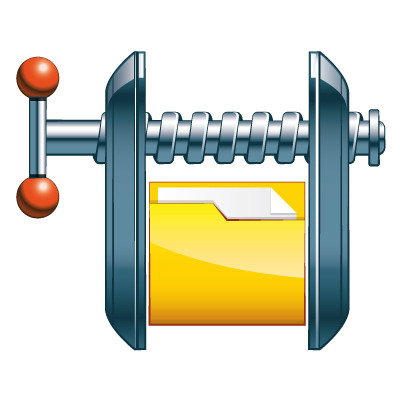
Have you ever seen the file types that look like normal folders, but they have a zipper on the icon? These are ZIP files, and they are helpful for a variety of reasons. We’re sure you have encountered zipped files throughout your time using technology, and today, we want to demystify them a little bit and show you how to use them effectively.

While AI is far from perfect, I always love discovering ways that it can help do something mundane and speed up a workflow here or there. I’m no expert in Photoshop either, so if I need to edit something, I usually depend on someone with a little more experience, but this was a really neat trick I was able to do in just a few minutes!

Passwords have long been one of the central pillars of account security on the Internet. Combined with a username, they make up the foundation of most login systems. Because of this, they are a hot commodity for hackers who want to steal credentials and infiltrate accounts or networks. In recent years, however, other security measures have exposed the weakness of poor passwords for security, leading to the adoption of other measures.

Note taking apps are really useful and Microsoft OneNote is one of the most available and feature rich apps on the market for this use. You are probably familiar with the sticky note. They are notes that give a solid visual representation of items that workers need to be cognizant of for all types of processes. In today’s blog, we will go through the process of creating “sticky notes” in OneNote.

There will always be times when you have to invite guests and other external users to your Microsoft Teams meetings, especially if you want to take advantage of the many collaboration options offered through the platform. However, you need to be very careful with guests and external users–especially in today’s cybersecurity-centric world.

Technology plays a massive role for most organizations nowadays, and not everyone always grasps the importance of it. Most of the time, there is so much built into today’s enterprise software that it can often be overwhelming for workers to use it effectively. Today, we will give you three tips on how to help employees get a grasp of the technology their productivity depends on.

Obviously, we won’t tell you to cut down on your cybersecurity. That said, it can be easy to overinvest and overreach if you aren’t careful about what you’re implementing. This phenomenon is known as cybersecurity sprawl, and if not prevented, it can easily have serious consequences for your business. Let’s go into how to avoid this sprawl.

When you think of a scammer, you probably think of someone looking to take advantage of someone for their own gain. While this isn’t wholly inaccurate, another variety exists to acknowledge… those who aim to scam the scammers. Let’s consider one such white-hat scammer, or “scam baiter,” a content creator who uses the alias “Kitboga,” Kit for short.

The world’s largest ticket retailer is in hot water after their parent company, Live Nation Entertainment filed an 8-K filing with the Security and Exchange commission admitting that they had been hacked to the tune of 1.3 terabytes of information. That amounts to 560 million customers’ personal information that has been stolen from the company’s servers. Today, we take a look at the hack and what it means for consumers.

It can be challenging to deal with failure in any context, but in the case of your workplace projects and other efforts, it can be particularly harsh. This makes it all the more important to frame such failures as opportunities to grow in the future.
Let’s discuss six reasons an initiative may fail and the lessons that can be learned from these situations.

Unfortunately, cyberattacks will only continue in the weeks, months, and years to come, making it increasingly essential that businesses have access to cybersecurity expertise. Even more unfortunately, professionals with this level of expertise are becoming harder to find. Globally, we’re short almost four million people, and those we have are prone to make mistakes in their first few years. This comes from a report by Kaspersky, entitled “The Portrait of Modern Information Security Professional,” Let’s review what the cybersecurity developer found and what we can take away from these findings.
Mobile? Grab this Article